
Payments
Card present, card not present, ACH, contactless, and tap-to-pay.
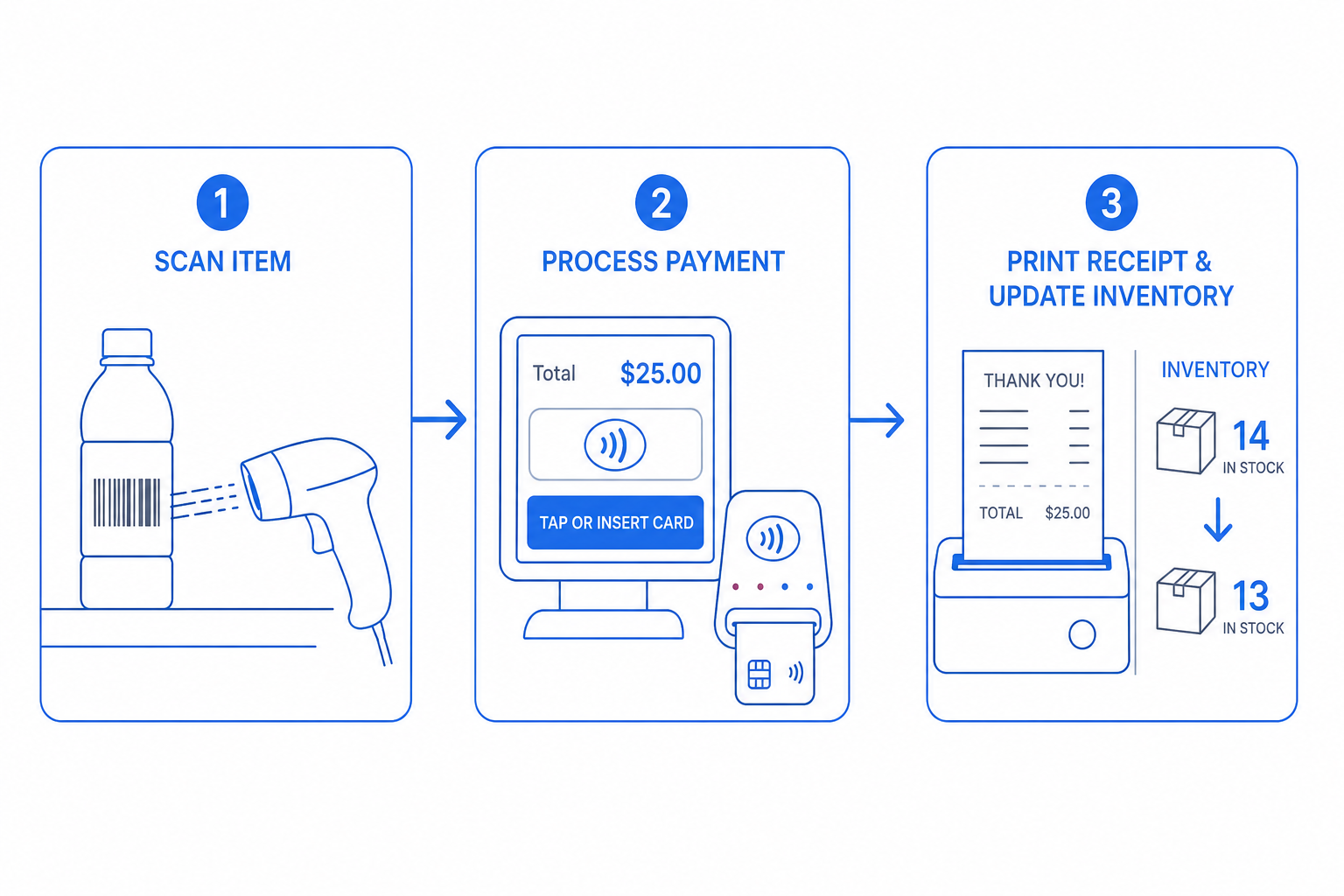
Payment processing is where SMB margin gets shaved. CloudIP payments offers transparent interchange-plus pricing with US merchant accounts, plus the ability to bring an existing processor for tenants with negotiated rates.
All channels — card present, online checkout, ACH, contactless, tap-to-pay — settle into the same general ledger.
Inside Payments
Specifics that distinguish CloudIP Payments from the alternative.
Card present
Chip, swipe, contactless, and tap-to-pay on supported devices.
Card not present
Online checkout, invoice payment links, and saved-card billing.
ACH
Bank-debit payments with verification.
Bring your own processor
Existing merchant accounts can be integrated for negotiated rates.
Payments on the CloudIP platform
Where this capability lives, who runs it, and what it shares with the rest of the system.
Payments runs as part of the CloudIP Point of Sale module on the same multi-tenant infrastructure as every other capability you use. There is no separate console to log into and no separate billing line: small business payment processing is provisioned the moment your tenant is created and stays in lockstep with the rest of the platform as it grows.
Operators interact with small business payment processing through the Point of Sale interface they already know — the same record screens, the same audit trail, the same role and permission model. Behind the scenes, card present handles the heavy lifting, while bring your own processor keep the experience consistent across teams. Configuration changes are versioned, exportable, and reviewable, so the way you run small business payment processing today is reproducible tomorrow.
Because Payments reuses the platform's user database, every action is attributable, every record has a stable ID, and every export honours the tenant's data residency choice. That means small business payment processing reports tie out to the rest of the books, audit logs, and operational dashboards without an integration step in between.
Payments fits inside CloudIP Point of Sale alongside the other point of sale capabilities — they share the same data model, so improvements in one tend to compound across the others. If you are evaluating CloudIP specifically for small business payment processing, the rest of Point of Sale comes along at no extra cost.
Common questions about Payments
Stripe is the default processor under the hood, with a CloudIP-managed merchant account for most SMBs. Larger merchants can bring their own merchant account; the rate sheet and reserve are negotiated separately.
More from Point of Sale
Bar-code scan, returns, layaway, and multi-store inventory.
Table service, quick service, modifiers, tabs, and tips.
Appointment-driven checkout for salons, clinics, and pros.
Physical and digital gift cards with balance lookup.
Points, tiers, and rewards tied to customer profiles.
KDS routing per station, prep timing, and bumps.
Try Point of Sale free for 14 days
See Payments alongside the rest of the platform on real data.