
Online Store
Themes, product pages, cart, and checkout on your domain.
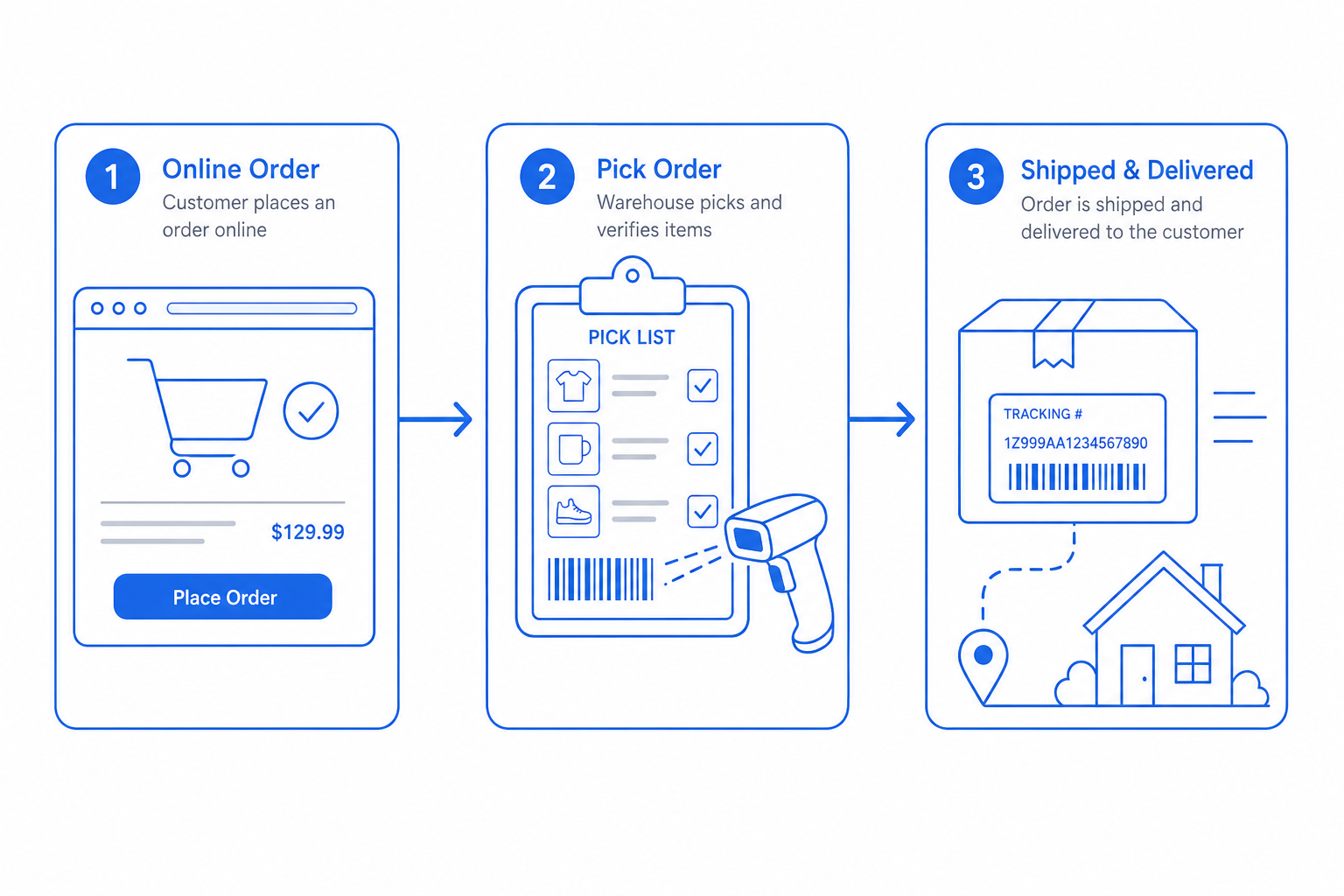
An online store is more than a product page — it is themes, cart logic, checkout UX, and the operational tooling behind every order. CloudIP online store ships them all in one product on your domain.
Customer accounts and order history are the same records the rest of the platform uses.
Inside Online Store
Specifics that distinguish CloudIP Online Store from the alternative.
Themes and blocks
On-brand templates with editable blocks for fast launches.
Product pages
Variants, kits, bundles, and rich media support.
One-page checkout
Express checkout with saved payment methods.
Customer accounts
Order history and re-orders from one customer profile.
Online Store on the CloudIP platform
Where this capability lives, who runs it, and what it shares with the rest of the system.
Online Store runs as part of the CloudIP E-commerce module on the same multi-tenant infrastructure as every other capability you use. There is no separate console to log into and no separate billing line: online store builder is provisioned the moment your tenant is created and stays in lockstep with the rest of the platform as it grows.
Operators interact with online store builder through the E-commerce interface they already know — the same record screens, the same audit trail, the same role and permission model. Behind the scenes, themes and blocks handles the heavy lifting, while customer accounts keep the experience consistent across teams. Configuration changes are versioned, exportable, and reviewable, so the way you run online store builder today is reproducible tomorrow.
Because Online Store reuses the platform's user database, every action is attributable, every record has a stable ID, and every export honours the tenant's data residency choice. That means online store builder reports tie out to the rest of the books, audit logs, and operational dashboards without an integration step in between.
Online Store fits inside CloudIP E-commerce alongside the other e-commerce capabilities — they share the same data model, so improvements in one tend to compound across the others. If you are evaluating CloudIP specifically for online store builder, the rest of E-commerce comes along at no extra cost.
Common questions about Online Store
Yes. Catalog import (CSV or direct), customer migration, order history, and URL redirect mapping are the standard steps. Most SMB migrations complete in a few days; larger ones with custom logic take longer.
More from E-commerce
Picking lists, packing slips, batch fulfillment, and scan-to-confirm.
Stock levels, locations, transfers, and low-stock alerts.
One source of truth across CloudIP, Amazon, eBay, Walmart, and Shopify.
Rule-based and competitor-driven re-pricing across channels.
Live rates, labels, tracking, and returns from one carrier list.
Self-serve RMA portal with restocking and refund posting.
Try E-commerce free for 14 days
See Online Store alongside the rest of the platform on real data.