
Inventory Management
Stock levels, locations, transfers, and low-stock alerts.
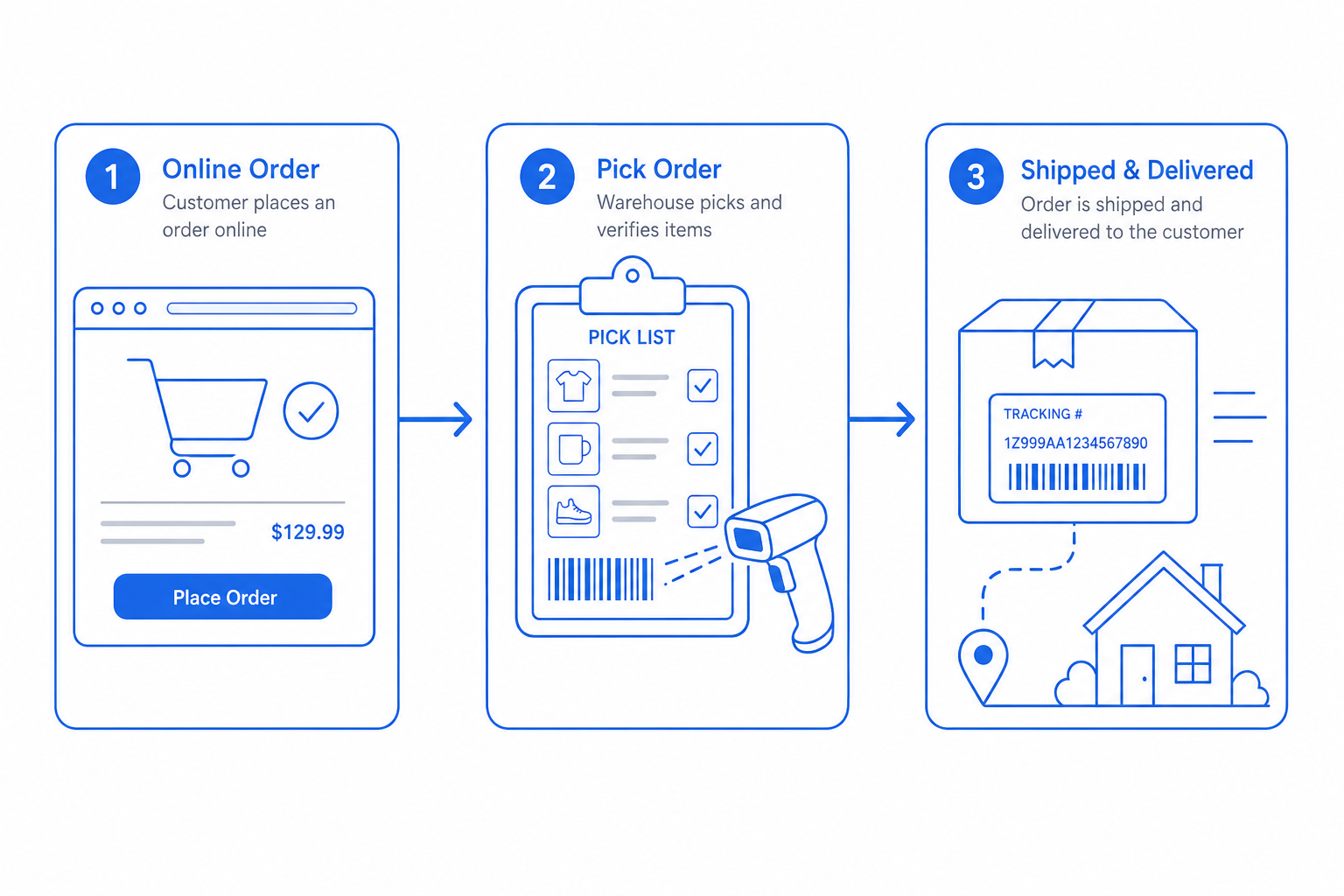
Inventory accuracy is the floor of e-commerce operations. Sell what you do not have and you eat the refund and the apology email. CloudIP inventory tracks stock per location, supports transfers between sites, and alerts when stock crosses a threshold.
The inventory is the same number across POS, online store, and external channels.
Inside Inventory Management
Specifics that distinguish CloudIP Inventory Management from the alternative.
Per-location stock
Track what is in each warehouse, store, or van.
Transfers
Move stock between locations with paperwork and audit trail.
Low-stock alerts
Per-SKU thresholds with reorder point and max levels.
Adjustments
Cycle counts and adjustments with reason codes for accounting.
Inventory Management on the CloudIP platform
Where this capability lives, who runs it, and what it shares with the rest of the system.
Inventory Management runs as part of the CloudIP E-commerce module on the same multi-tenant infrastructure as every other capability you use. There is no separate console to log into and no separate billing line: small business inventory management is provisioned the moment your tenant is created and stays in lockstep with the rest of the platform as it grows.
Operators interact with small business inventory management through the E-commerce interface they already know — the same record screens, the same audit trail, the same role and permission model. Behind the scenes, per-location stock handles the heavy lifting, while adjustments keep the experience consistent across teams. Configuration changes are versioned, exportable, and reviewable, so the way you run small business inventory management today is reproducible tomorrow.
Because Inventory Management reuses the platform's user database, every action is attributable, every record has a stable ID, and every export honours the tenant's data residency choice. That means small business inventory management reports tie out to the rest of the books, audit logs, and operational dashboards without an integration step in between.
Inventory Management fits inside CloudIP E-commerce alongside the other e-commerce capabilities — they share the same data model, so improvements in one tend to compound across the others. If you are evaluating CloudIP specifically for small business inventory management, the rest of E-commerce comes along at no extra cost.
Common questions about Inventory Management
Inventory is one number across the storefront, marketplaces, and POS. Every sale, return, transfer, and adjustment posts to the same record; the channels read from it. Real-time accuracy is a property of the architecture, not a sync job.
More from E-commerce
Themes, product pages, cart, and checkout on your domain.
Picking lists, packing slips, batch fulfillment, and scan-to-confirm.
One source of truth across CloudIP, Amazon, eBay, Walmart, and Shopify.
Rule-based and competitor-driven re-pricing across channels.
Live rates, labels, tracking, and returns from one carrier list.
Self-serve RMA portal with restocking and refund posting.
Try E-commerce free for 14 days
See Inventory Management alongside the rest of the platform on real data.