
Incident Response
Playbooks, isolation, and forensic timelines after detection.
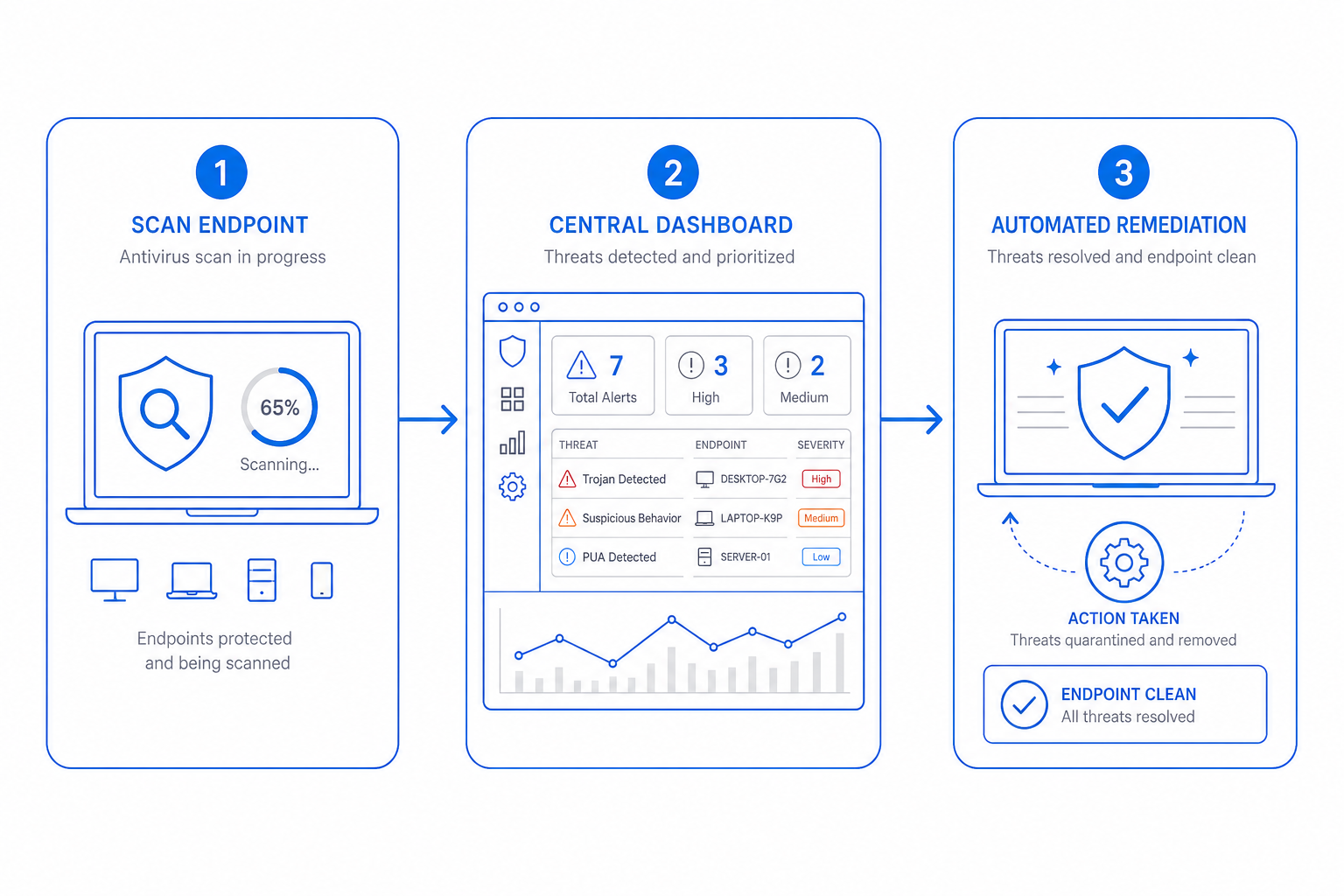
Most SMBs have no playbook for a security incident. CloudIP packages the response steps so the first hour after detection is structured: isolate, snapshot, investigate, recover.
Each step preserves the evidence chain for follow-up.
Inside Incident Response
Specifics that distinguish CloudIP Incident Response from the alternative.
Pre-built playbooks
Ransomware, credential theft, and phishing playbooks ready to run.
Isolation step
Cut affected hosts from the network as the first action.
Forensic timeline
Auto-generated timeline of relevant events from the audit log.
Recovery integration
Pivot to the backup module to roll affected systems back.
Incident Response on the CloudIP platform
Where this capability lives, who runs it, and what it shares with the rest of the system.
Incident Response runs as part of the CloudIP Cybersecurity module on the same multi-tenant infrastructure as every other capability you use. There is no separate console to log into and no separate billing line: SMB incident response is provisioned the moment your tenant is created and stays in lockstep with the rest of the platform as it grows.
Operators interact with SMB incident response through the Cybersecurity interface they already know — the same record screens, the same audit trail, the same role and permission model. Behind the scenes, pre-built playbooks handles the heavy lifting, while recovery integration keep the experience consistent across teams. Configuration changes are versioned, exportable, and reviewable, so the way you run SMB incident response today is reproducible tomorrow.
Because Incident Response reuses the platform's user database, every action is attributable, every record has a stable ID, and every export honours the tenant's data residency choice. That means SMB incident response reports tie out to the rest of the books, audit logs, and operational dashboards without an integration step in between.
Incident Response fits inside CloudIP Cybersecurity alongside the other cybersecurity capabilities — they share the same data model, so improvements in one tend to compound across the others. If you are evaluating CloudIP specifically for SMB incident response, the rest of Cybersecurity comes along at no extra cost.
Common questions about Incident Response
It enumerates affected systems, isolates the ones that are compromised, snapshots state for forensics, opens a war-room channel in team chat, notifies the on-call rotation, and keeps a chronological log of every action taken with the operator and timestamp.
More from Cybersecurity
Modern AV/EDR for Windows, macOS, and Linux endpoints.
Behavioral detection, isolation, and rollback through the backup module.
Tenant-wide change history exportable for SOC 2 and HIPAA reviews.
Pre-built evidence packs for HIPAA, SOC 2, and PCI controls.
TOTP and WebAuthn MFA, plus SAML/OIDC SSO for the whole tenant.
Alerts when employee credentials or domains appear in breach data.
Try Cybersecurity free for 14 days
See Incident Response alongside the rest of the platform on real data.