
Shopify integration
Channel sync if you keep an existing Shopify storefront.
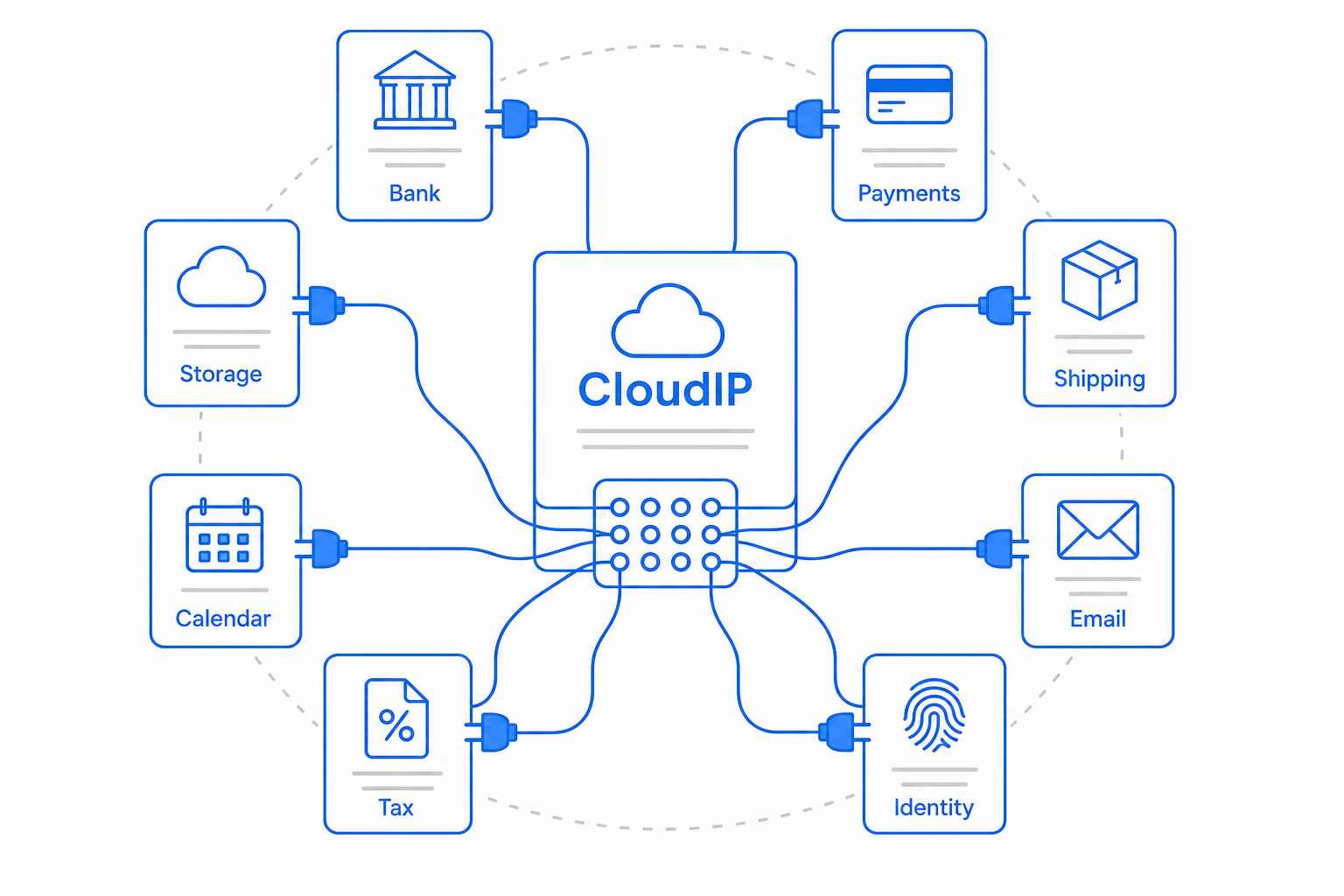
How Shopify fits in CloudIP
- Provides the connection between CloudIP and this third-party service.
- Operates within the relevant module(s) listed in the integrations directory.
- Honors the documented authentication and rate-limit constraints of the upstream provider.
Why this integration exists
This integration exists because the underlying service offers capabilities that complement the CloudIP platform.
Configuration notes
- Configuration lives in the relevant module's settings.
- Authentication uses standard OAuth or API-key patterns; no credentials are shared between tenants.
How the Shopify integration runs in production
The Shopify integration is part of the standard CloudIP subscription — it is not a partner-tier add-on or a separate billing line. Authentication, rate limiting, and error handling are managed inside the platform, and any change in the Shopify state of the world propagates to the relevant CloudIP module without operator intervention.
For most customers, the integration is invisible after the initial connection: records appear in the e-commerce module they belong to, and downstream workflows — reports, audit trail, exports — see the same data the rest of the platform sees. The integration honours the tenant.dataResidency choice you make at provisioning, so Shopify traffic respects the same boundary as your own records.
If you eventually outgrow the Shopify integration, the data it touches stays inside CloudIP — the integration is a connector, not a system of record. That means swapping Shopify for an alternative does not require a data migration; it requires reconnecting the source.
Common questions about the Shopify integration
Yes. The Shopify integration is part of the platform; there is no per-integration fee or premium tier required to use it. You bring your own Shopify account where applicable, and CloudIP handles the connection.
Start free for 14 days
See how CloudIP and its integrations work together on real data.