
Hyper-V
Hyper-V host and guest backup with VSS-aware in-guest snapshots.
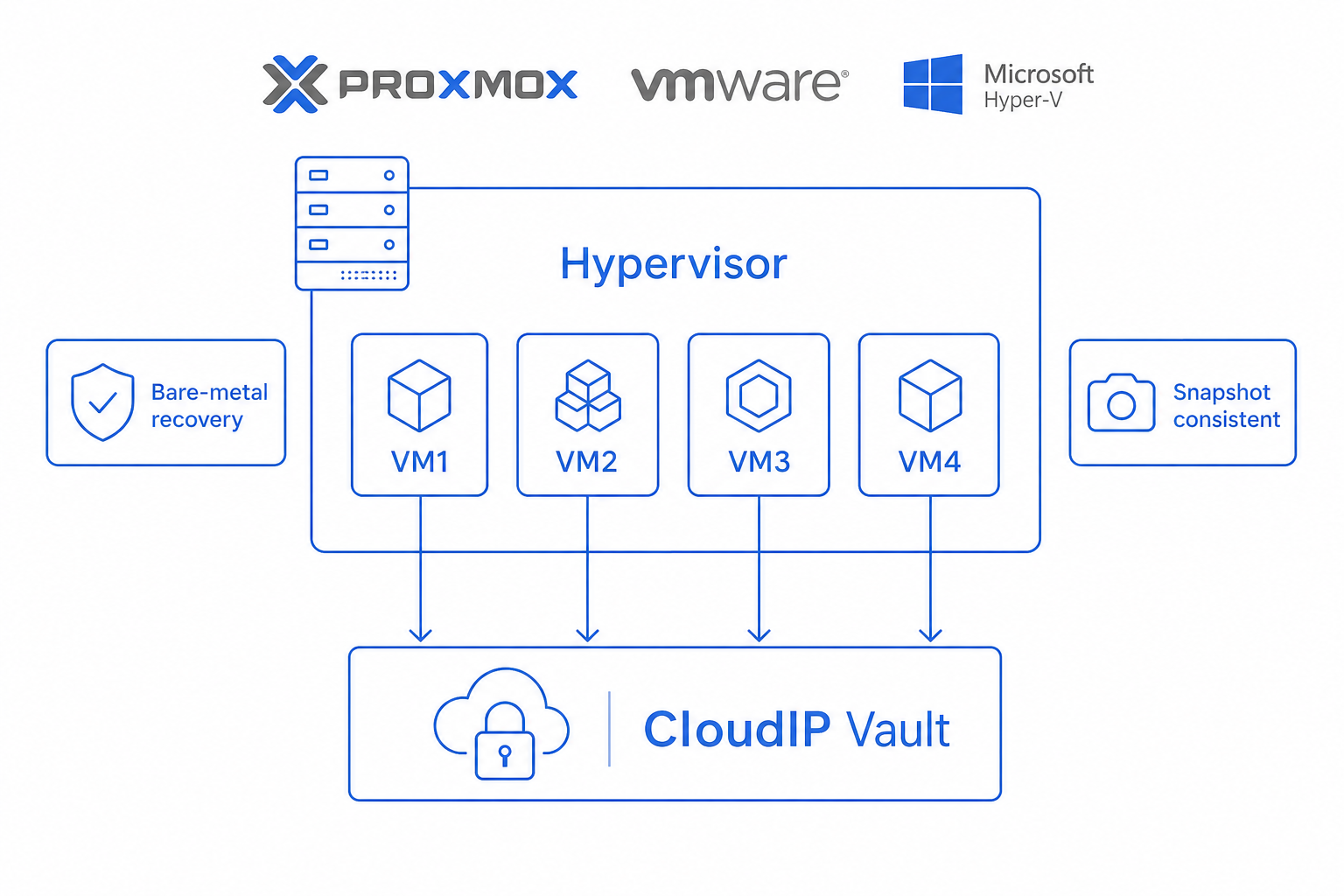
Hyper-V is common in Windows-centric SMBs. CloudIP backs up the host filesystem and runs in-guest agents inside VMs for application-consistent backups.
Cluster Shared Volume configurations are supported.
What Hyper-V gets from CloudIP
In-guest VSS
Application-consistent backups inside Windows VMs.
Host filesystem
Host-level capture of configs and stored VHDXs.
CSV support
Cluster Shared Volume configurations supported.
Bare-metal recovery
Restore Hyper-V hosts to replacement hardware.
How CloudIP shows up for Hyper-V
A practical walkthrough of what changes when this audience runs on the platform.
If you are evaluating CloudIP because of Hyper-V, you are likely already running a stack that integrates around it. CloudIP is built to be a friendly neighbour to Hyper-V rather than a replacement: where Hyper-V is the system of record, CloudIP defers; where CloudIP owns the operational record, Hyper-V reads from a documented endpoint.
The most common pattern is a thin integration with Hyper-V for the parts of the business it already runs, and CloudIP for everything else — accounting, CRM, HR, communications, POS, and backup. In-guest VSS is what makes that practical at SMB scale.
Because the platform exposes REST endpoints and webhooks for every meaningful state change, the integration with Hyper-V stays under your control. There is no special partner program, no hidden surcharge, and no implementation gating — the same automation primitives are available to every customer on day one.
Common questions from Hyper-V buyers
Yes. Hyper-V backup is one of the named buyer profiles the platform is designed around. In-guest VSS and Host filesystem that matter most for Hyper-V are part of the standard subscription rather than a tier upgrade.
Try CloudIP for Hyper-V
14-day free trial with every module enabled. We'll help you import from your current tools.